The United States has started evacuating hundreds of troops from its largest air base in the Middle East ahead of potential military action by President Donald Trump against Iran, according to a U.S. official and a person familiar with the matter, according to NBC.
The troops at Al Udeid Air Base are moving to other facilities and hotels in the region, taking them out of harm’s way should any U.S. attack trigger retaliation from Tehran against American interests, the sources said.
The Qatari government said personnel were being withdrawn from the base “in response to the current regional tensions.” It said in a statement that it would take “all necessary measures to safeguard the security and safety of its citizens and residents as a top priority.”
The U.S. Mission to Saudi Arabia meanwhile advised personnel and American citizens to “exercise increased caution and limit non-essential travel to any military installations in the region.”
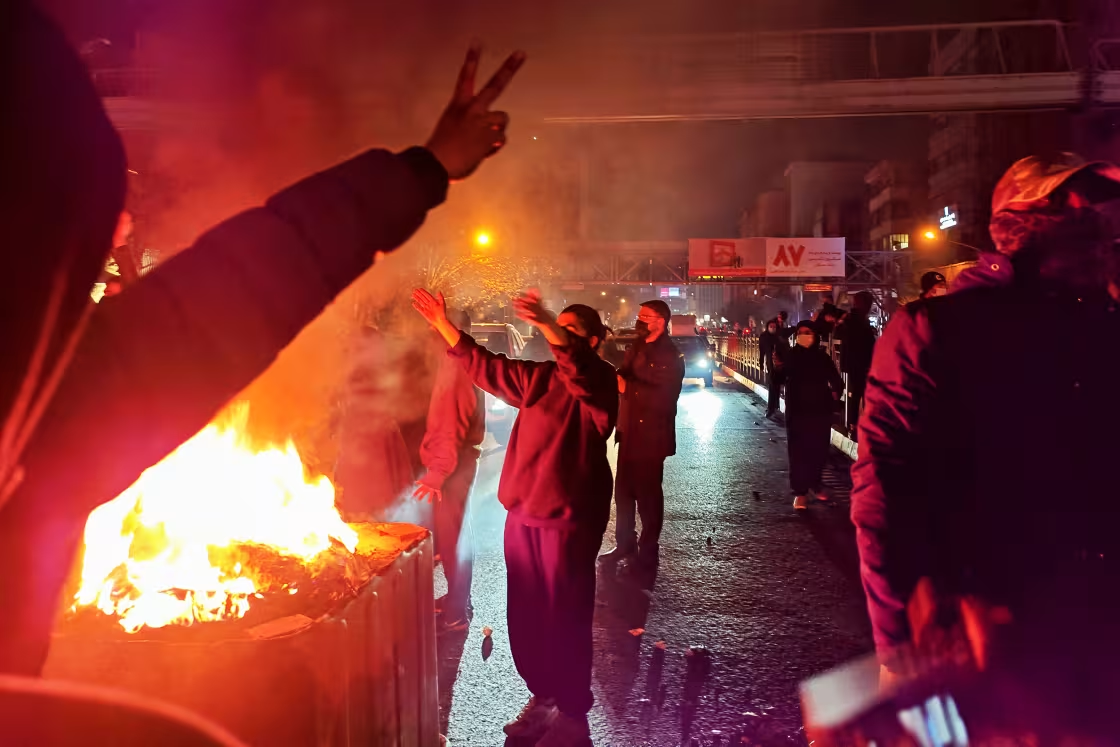
The effort comes as President Donald Trump considers a range of options for potential military action in Iran in response to the regime’s deadly crackdown on protesters.
Iranian officials said Sunday that U.S. and Israeli military bases in the region could be targeted if a strike goes ahead.
“U.S. military and maritime centers will be our legitimate targets,” Iranian Parliament Speaker Mohammad Baqer Qalibaf said in remarks aired on Iranian state television.
Troops were removed from Al Udeid in June for the Pentagon’s mission against nuclear enrichment sites in Iran, an operation the U.S. dubbed “Midnight Hammer,” which saw Iran launch retaliatory missiles at the base. That removal was done at the last minute with less coordination, the person familiar with the matter said. The current removal of troops appears to be part of a more coordinated effort in advance of any operation, the person said.
Reuters first reported the evacuation of troops.
Trump has warned of “very strong action” if the regime proceeds with executions of protesters in connection with the nationwide unrest that has rocked the country, though Israeli and Arab officials have privately suggested the U.S. hold off on strikes.
Iranian authorities were Wednesday expected to execute the first person in relation to the nationwide unrest that has rocked the country, according to the U.S. and human rights groups.
Iranians have had no internet connection for days, but information and videos trickling out of the Islamic Republic suggest the protests were met with a brutal response not seen in decades of crackdowns against internal dissent.
At least 2,500 people have been killed since the unrest erupted last month against spiraling prices, according to the U.S.-based Human Rights Activists News Agency. It added that this figure includes nearly 150 security personnel.
An additional 18,000 people have been arrested, according to HRANA.
The advocacy group says it relies on supporters in Iran cross-checking information and that its data goes through “multiple internal checks.” HRANA attributed a dramatic rise in its death toll Tuesday to Iranians’ ability to make their first calls to the outside world in days.
Among those arrested is Erfan Soltani, 26, whose execution is scheduled for Wednesday, according to the State Department, Amnesty International and other human rights activists.
“This time, the Islamic Republic regime didn’t even bother with its usual 10-minute sham trial; Erfan was sentenced to execution without any legal process or defense lawyer,” the State Department said in an X post.
A senior Iranian official called for the country to impose swift penalties to ensure order is restored.
“If we want to do a job, we should do it now. If we want to do something, we have to do it quickly,” Iran’s judiciary chief, Gholamhossein Mohseni-Ejei, said in a video shared online by Iranian state television.
“If it becomes late, two months, three months later, it doesn’t have the same effect. If we want to do something, we have to do that fast.”
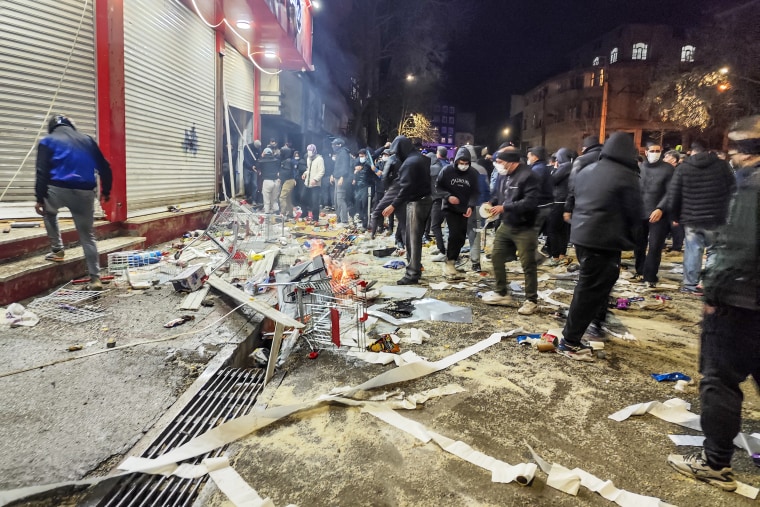
Soltani lost contact with his loved ones Jan. 8 amid the nationwide protests, and his family was told Sunday that he had been sentenced to death, Amnesty said in a statement.
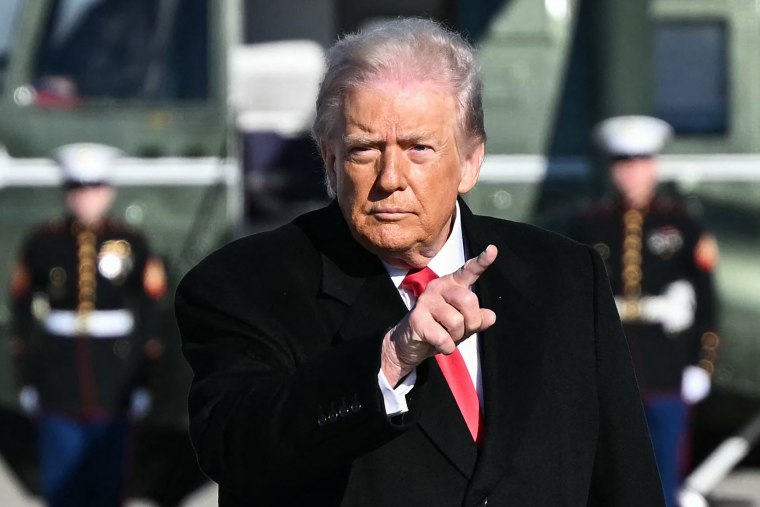
Trump told CBS News that “if they do such a thing” — and go ahead with Soltani’s execution — “we will take very strong action.”
He described the killing of protesters as “significant,” but added that “we don’t know yet for certain” what the actual death toll is.
French Foreign Minister Jean-Noël Barrot told RTL radio Wednesday that “we suspect this is the most violent repression in Iran’s contemporary history” and that “it must stop immediately.”
Despite the communications blackout, videos geolocated by NBC News have emerged showing scores of bodies piled outside a makeshift morgue near Tehran. Though the internet has now been down more than 132 hours, Iranians have been able to make some international calls, describing a heavy security presence on the streets and light foot traffic despite shops reopening.
Trump has weighed both military and diplomatic options in response to the deadly government crackdown. But he suggested Tuesday that talks with Iran were on hold while the violence continued, adding that Iranians should “keep protesting” and that “help is on its way.”
Iran has acknowledged a high number of casualties, but instead claimed they are ordinary people killed by “terrorists” and “rioters.” The semi-official Fars news agency said that most of those who died were “ordinary citizens and passers-by who had no connection whatsoever to the riots themselves.”
A mass funeral attended by tens of thousands was held under heavy security in Tehran on Wednesday for security force members and civilians, The Associated Press news agency reported.
Iran has also accused the U.S. of engineering “unrest and chaos, serving as the modus operandi to manufacture a pretext for military intervention,” the country’s mission to the United Nations posted on X.
 The Daily Wyvern